
Porto Santo – The Golden Island of Madeira. Paradise beaches, tranquility, and sunshine.
Introduction
Imagine an island where a golden, sandy beach stretches for miles, and the atmosphere is filled with idyllic tranquility. Welcome to Porto Santo – the lesser-known but enchanting sister of Madeira. Dubbed "The Golden Island" (Ilha Dourada), it owes its nickname to a unique 9-kilometer stretch of fine, golden sand, which is even said to have healing properties. While the main island of the archipelago delights with mountainous landscapes and lush greenery, Porto Santo primarily tempts with paradise beach relaxation, a milder climate, and an intimate atmosphere.
It is the perfect destination for those seeking relaxation, lovers of long, sandy coastlines, families with children, and those who wish to find a moment of true peace by the ocean after an intense tour of Madeira. If you dream of a vacation where the beach is at your fingertips and the pace of the day is dictated only by the tides and sunsets, Porto Santo is just for you.
Porto Santo – where is it and how does it differ from Madeira?
Porto Santo is the second-largest inhabited island in the Madeira archipelago, located to the northeast of the "Main Island." They are separated by just about 50 km of open ocean, which practically means a little over a 2-hour ferry ride.
However, the differences between the islands are more pronounced than one might think:
-
Landscape: Madeira is the "Floating Garden" – mountainous, covered with dense, subtropical laurel forest (Laurisilva), with a rugged coastline. Porto Santo, on the other hand, is flat and drier. Gentle hills, golden dunes, and rocky coasts dominate the landscape in the north. There are no spectacular green mountains here; instead, the beach is the undisputed queen.
-
Climate: Thanks to its flat terrain and sandy substrate, Porto Santo is warmer and significantly drier than Madeira. There is little rainfall, and the sun shines for most of the year, making it an excellent place for sunbathing even outside the peak season.
-
Atmosphere and style of relaxation: Madeira is vibrant, offering hundreds of attractions, monuments, and trekking trails. Porto Santo is its peaceful complement. Life here moves slower; there are no crowded resorts, and at night, blissful silence is only broken by the sound of waves. It is true "slow travel."
How to get to Porto Santo?
You can get here in two ways: by ferry or by plane. The choice depends on your plans and budget.
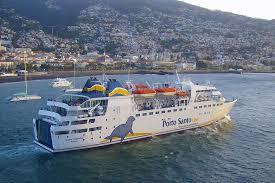
Ferry from Funchal (Porto to Funchal) to Porto Santo
-
Carrier: The route is operated by the company Porto Santo Line..
-
Travel time: The journey takes about 2 hours and 15 minutes one way.
-
Availability: Ferries run regularly, but the schedule changes depending on the season (more frequently in summer, less often in winter). Make sure to check the current schedule and book tickets online in advance, especially if you are traveling with a car.
-
Prices: A one-way ticket for a pedestrian starts at around 50-60 EUR. Transporting a car incurs an additional cost. Return packages or last-minute offers are often available.
-
Experience: The ferry ride itself is an attraction – from the deck, you can see Madeira emerging and Porto Santo approaching. However, in rough seas, it can be quite rocky.
-
Where: A modern cruise terminal (opened in 2010) measuring 170 meters, located in a bay sheltered by black volcanic rocks.
Flights to Porto Santo
-
Airport: There is a small airport on the island (Aeroporto do Porto Santo, PXO).
-
Connections: Direct flights from mainland Portugal (Lisbon) operated by TAP Portugal and other carriers. Flights from Funchal airport are operated by Binter Airlines. There are also charter connections from some European countries.
-
When to choose a plane? A flight is the best choice if:
-
You are arriving from Lisbon and want to start your relaxation in Porto Santo right away.
-
You do not want to waste time on a ferry.
-
You are traveling during a time when the sea can be more restless.
-
The biggest attraction of Porto Santo – the golden beach
Praia de Porto Santo is a true treasure of the island and the main reason tourists come here. It is 9 km of uninterrupted, golden sand stretching along the southern coast, from Vila Baleira to the Ponta da Calheta cape.
-
Health benefits of the sand: Local fine sand contains a high concentration of calcium, magnesium, and strontium, which according to studies gives it anti-inflammatory and healing properties for joint and bone problems.. It is traditionally recommended to bury in sand (psammotherapy) for rheumatism or muscle pain.
-
Conditions for bathing: The beach is wide, and the descent to the water is very gentle, making it safe and ideal for children. The ocean in the bay is usually calmer than on the open coast of Madeira. Part of the beach is guarded by lifeguards (in summer).
-
Infrastructure: A promenade stretches along the beach, where you will find bars, restaurants, sunbed and umbrella rentals, and toilets. Despite its popularity, due to its length, the beach never seems crowded..
What to see on Porto Santo? The main attractions.
Although the beach is a magnet, the island also hides several charming attractions worth discovering.
Vila Baleira – the capital of the island.
It is the heart and the only town on the island. Walking through its peaceful streets, you will feel the authentic Portuguese atmosphere. It is worth visiting the marina,, the local market, and numerous cozy restaurants serving fresh fish and local wine.In the evening, the square by the Church of Our Lady of Pity (Igreja de Nossa Senhora da Piedade) comes alive.
The House of Christopher Columbus (Casa Colombo – Museu do Porto Santo)
This is one of the most historically interesting buildings. The sailor and explorer Christopher Columbus, who married the daughter of the former governor of the island, lived here for several years. The museum presents exhibits related to his life, the age of great geographical discoveries, and the history of the island itself. This is a must-see for history lovers.
Pico do Castelo
On the hill (437 m above sea level) in the center of the island, there are the ruins of a 16th-century fort,, built for protection against pirates. Climbing (or driving) to the top is the best investment of time on the island. From here, there is a panoramic 360° view of all of Porto Santo: the golden beach, airport, Vila Baleira, and the surrounding ocean. The viewpoint is well marked.
Pico Ana Ferreira and basalt formations
This is the highest hill on the island (283 m above sea level) known for its unique geological formations – “Palheta”, which are huge, vertical basalt columns resembling giant organ pipes. The landscape is rugged, lunar, and testifies to the volcanic origin of the island. Reaching the summit requires a short but steep walk.
Miradouros on Porto Santo
The island offers several picturesque viewpoints (miradouros):
-
Miradouro da Portela: A view of the northern, cliffy coast.
-
Miradouro das Flores: Offers a view of the bay and beach from above.
-
Miradouro da Gandaia: An ideal spot to watch the sunset over the ocean.
Porto Santo – activities and ways to spend time.
-
Sunbathing and relaxation: This is, of course, number one. Sunbathing, reading a book, long walks along the ocean.
-
Snorkeling and diving: The clear waters around the island, especially around the islets (Ilhéu de Baixo, Ilhéu de Cima), are a paradise for lovers of the underwater world. You can rent snorkeling equipment or go on organized diving trips.
-
Water sports: Paddleboards, kayaks, and even water skis are also available..Walking and short treks:
-
The network of trails (e.g., Vereda do Pico Castelo, Vereda do Pico Ana Ferreira) allows you to discover the dry, volcanic interior of the island. The routes are not long, but can be steep. Cycling:
-
The flat terrain along the beach and quiet roads inside the island are ideal for cyclists. Bicycles can be rented in Vila Baleira. When is the best time to visit Porto Santo?
Porto Santo
is a year-round destination, thanks to its mild, subtropical climate.The best months for sunbathing are:
-
From May to October. Air temperatures reach 25-28°C, and ocean waters 21-24°C. July and August are the warmest and driest (peak season).For a peaceful getaway:
-
April, May, September, October offer excellent weather with fewer tourists. Winter (November – March) is mild (17-20°C), but rainy and windy days can occur. The ocean water is cooler then, but for the determined, swimming is possible. Porto Santo – practical information for tourists.
Getting around the island:
-
The island is small (about 11 km long). To explore attractions within the island, renting a car is the most practical. Taxis are available. For the active, great choices are bicycles or quads. The central part can also be explored on foot.
-
Accommodation: The main offer includes hotels and apartments in Vila Baleira and along the beach. Here you will find both modern complexes with spas and modest family guesthouses.
-
Restaurants and cuisine: Traditional fish taverns. You must try the local swordfish (espada), black-cornered tuna (atum) and the famous dessert "Queijadas". Madeira wine is, of course, a must.
Porto Santo for one day or longer?
-
A day trip from Madeira: It is definitely possible by ferry. It allows you to feel the island's vibe, stroll along the beach, and explore Vila Baleira. It's a good option if you have limited time, but remember – it will be quite an intense day.
-
Accommodation on the island: If you are looking for true beach relaxation, it is definitely worth staying for 2-4 nights. This gives you time for blissful laziness, leisurely sightseeing of all attractions, and enjoying the unique tranquility of the island without haste.
Porto Santo vs Madeira – island comparison. Which one to choose?
It depends on your travel goal:
-
Choose Madeira, if: you love mountain hikes (levadas), lush nature, charming towns (Funchal, Santana), gardens, and flowers. You are looking for an active vacation with a rich cultural and culinary offer.
-
Choose Porto Santo, if: your priority is relaxation on the sandy beach, relaxation, sun, and peace. You are traveling with small children. You want to escape the hustle and bustle.
-
Ideal combination: Many tourists choose to combine their stay on both islands (e.g. 5-7 days in Madeira + 2-4 days in Porto Santo). This is an excellent way to experience the full contrasts of the archipelago – from mountain adventures to beach relaxation..
Tips before visiting Porto Santo
What to bring: High SPF sunscreen, sunglasses, a hat, comfortable walking shoes (for volcanic hills), a light sweater for the evenings.
Day plan: In the morning, when the sun is not yet too harsh, plan to visit attractions (Pico do Castelo, Columbus House). In the afternoon, dedicate time to sunbathing.
What to expect: Expect peace, simplicity, and authenticity. This is not a place for nightlife lovers and large resorts. The infrastructure is good but not excessively commercial.
Frequently asked questions about Porto Santo (FAQ)
Is Porto Santo suitable for families with children?
Yes, perfectly. Shallow, warm water, gentle descent to the ocean, and a safe, sandy beach are excellent for little ones. The calm atmosphere of the island fosters a family-friendly environment.
How many days are enough to explore the island?
To enjoy the beach and see key attractions (Vila Baleira, Pico do Castelo, Columbus House), 2 full days will suffice. For complete relaxation, it is worth dedicating 3-4 days.
Is Porto Santo expensive?
Prices are comparable to Madeira, and in some aspects (e.g., restaurants outside the center), even slightly lower. Accommodation in season can be high, similar to the rest of Portugal. Off-season, good deals can be found.
What are the rock formations of Pico Ana Ferreira?
These are basalt columns formed by the slow cooling and crystallization of lava. Their regular, vertical shapes are a natural geological phenomenon known as columnar jointing.
Porto Santo is a true gem of the Atlantic – a place where time slows down, and the main activity becomes enjoying the golden sand beneath your feet and the warm sun on your face. It is a must-stop for anyone wishing to experience the gentler, more relaxing side of the Madeira archipelago.
National Tourist Register - licence RNAVT n° 11932
Contact us
Website created in white label responsive website builder WebWave.